

NEED TO KNOW
Randy Newman hadn’t been doing much singing when he got a cold call from Jon Batiste. The musicians had met a decade earlier and spent some time together, but time went by, and they drifted apart. Now, though, Batiste was on a mission to connect with the artists that inspire him — and Newman was high on the list.
“He hadn’t been in fighting shape. He had been in a space that I was unaware of, but those in his life who were around were so excited to see him that excited about music,” Batiste, 39, tells PEOPLE. “When I’d come around, he’d be wanting to sing, and he wanted to be playing the piano.”
What emerged from their living room sessions was the song “Lonely Avenue,” which Batiste included on his album Big Money. The song is now up for Best American Roots Performance at the 2026 Grammy Awards, one of Batiste’s three nominations at this year’s ceremony; he’s also nominated for Best Americana Album and Best American Roots Song.
Phillip Faraone/Getty; Steve Granitz/WireImage
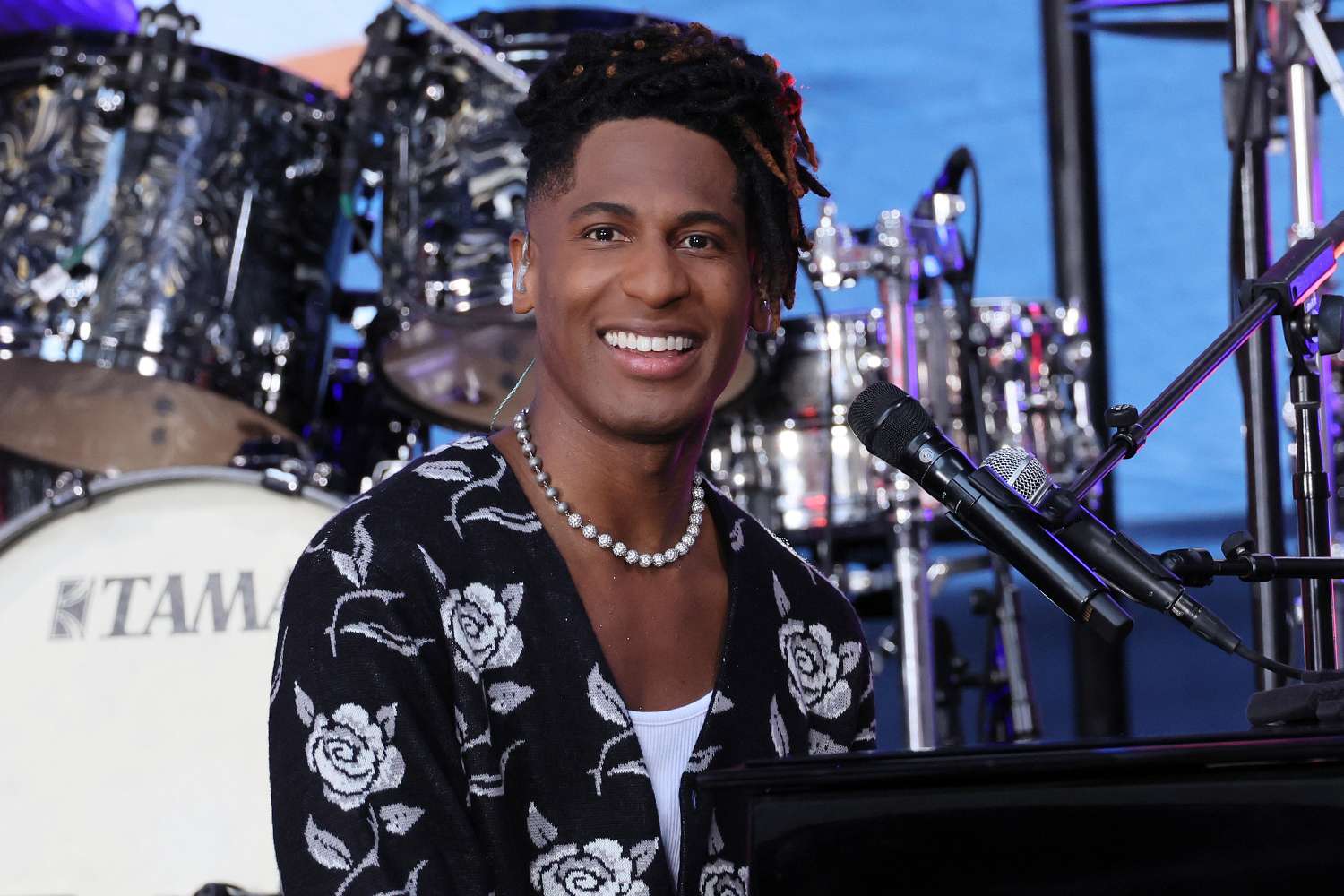
It’s not surprising that Batiste’s energy moved Newman, 82, to the point of creation. Batiste essentially is music; rhythm oozes through his pores, and even as he sits down for this interview, he belts out a few high notes out of nowhere, as if they’d been begging him to be released.
“It’s like Quincy Jones said one time. ‘If I don’t get up and write this thing at 4 in the morning when it hits me in a dream, then God’s going to go and give it to Henry Mancini,’” he says. “I try to have balance… but I don’t see it as a job. It’s more a calling. It’s a nice thing to be a vessel to the music.”
Big Money, Batiste’s ninth album, was recorded in just two weeks and is in line with his previous genre-defying releases — it blends gospel, soul, blues, folk and rock in a style all his own that’s rooted in what it means to be an American, especially in today’s day and age.
Dia Dipasupil/Getty
“This album is really an album about people and our collective history in sound and in song,” he explains. “Americana is something that was coined as a term around the year 2000, and now I think it’s ripe for a redefinition, an evolution. I think that Americana should and always has been a term to represent all of our music, the history and the essence of who we are.”
For one, Batiste says he loves the “pure and communal” rhythm of songs like the ones on Big Money — rhythms meant to be played in groups of people, together.
For Batiste, music has always meant community. He was born into a musical dynasty in New Orleans, then connected with his audience as a jazz pianist. As the bandleader on The Late Show with Stephen Colbert for seven years, he reached millions of viewers each night and now does the same through his own records and tours. His New Orleans heritage has stuck with him over the years, but he acknowledges that he and his peers have done what they can to expand upon their “cultural inheritance” in ways all their own.
Emma McIntyre/Getty
While the Grammys have been good to Batiste in the past (he has seven wins under his belt, including Album of the Year in 2022), being recognized for Big Money “means a lot” specifically because of what the album represents, he says.
Batiste is hopeful that such recognition, which in turn brings a large platform, helps inspire other people making music.
“We stand on the shoulders of men and women who have paved the way, and many of them were unsung and weren’t recognized,” he says. “You start to study the history and understand the meaning of what it all is. It’s so much bigger than you and your recognition and you being rewarded for carrying on the tradition.”
Still, that’s not to say it’s been an easy path to the top for Batiste. He admits that his 2022 Album of the Year win, for We Are, felt a bit like “making up for lost time.”
“I’ve been making records since I was 16, 17 years old, and I always thought that we were doing some stuff that was, by my estimation, Grammy worthy. And we hadn’t gotten recognized for over a decade — no nominations, no awareness of what we were doing,” he says. “I was bummed out by that. I was like, ‘Man, I don’t have this big ego or anything, but at least a nomination, man.’”
He continues: “It’s funny because that’s when the Grammys started to recognize it. I have so much of this great abundance of critical acclaim and success, but there was a long period of doing the work where I felt like I was doing it even though nobody was seeing it because I was the person to do it. And that’s my encouragement to anybody that’s out there — do the work not because you want to be seen or known or make money, do it because you’re the only one that can do it. The rest of the chips will fall where they may.”
Now, he feels it’s his duty to, as he calls it, “document the real.” Sometimes that means looking inwards at his own relationships, like on the song “Do It All Again,” written for his wife, Suleika Jaouad, a writer whom he calls a “beacon” in his life.
Natasha Campos/Getty
“It’s a ballad of love. You can imagine singing that to your love, or being the dance at your wedding,” Batiste says. “You realize through all of it, I would still do it all again. That’s a song I wrote for her because that’s the feeling of everything we’ve been through is still worth it. All of it is still worth it… I’m just glad that we found each other.”
Heading into this year’s Grammy Awards, Batiste says he plans to bring “way too many family members and friends” along for the ride and would especially love to take home a win with Newman, with whom he now shares a “beautiful bond and kinship.”
“[I hope I can] continue to develop my ideas and my artistic voice through the traditions of all these different musics and really extend those traditions and innovate and challenge them because I love disrupting stuff. I’m not a box checker,” he says. “I’m always able to see a way for this person over here and that person over there to come together and create magic. This is just the beginning of the continued expression of the real.”
The 2026 Grammy Awards will air live on CBS and Paramount+ on Sunday, Feb. 1.
