

NEED TO KNOW
Danny Hastings followed his curiosity into a fascinating, legendary career.
The photographer started off as a teenager pursuing a passion. He had just completed high school when he landed in New York, sharing a home with his mom and siblings in Queens. After a few years, Hastings’ mother decided to return to Panama. He and his brother wanted to stay in New York, and did what they had to in order to make that happened.
“We stayed and figured out life, basically. By the age of 20, I already had a camera. I was shooting constantly. When I was trying to fit my way, [to figure out] how to make money, I read that photographers would make so much money, but I didn’t know how.”
Hastings’ passion became all-consuming, spending hours studying album covers and reading the liner notes to see who was responsible for the art.
Never miss a story — sign up for PEOPLE’s free daily newsletter to stay up-to-date on the best of what PEOPLE has to offer, from celebrity news to compelling human interest stories.
“I started looking at album covers, and wow, some of the new records that I was buying, because I was buying a lot of hip-hop now, I was a New Yorker, four years, I was getting Boogie Down Productions, KRS-One, Big Daddy Kane, all that late ’80s stuff, EPMD was coming out,” he shares.
“And then the epiphany came in, and I was looking at the album cover and something that I wasn’t really curious about before, I realized that all the albums that I had, there was an address and there was a name to this album, whether it was a manager, whether it is an executive producer, whether it is an art director, with a photographer, I was like, ‘Man, all these people are here in New York, and I’m here in New York, so why not?’ ”
Hastings would read books about the craft and explore the city with his camera in hand.
“I started showing up, this young Latino that barely spoke English, with a portfolio of friends that I took pictures of. And I knocked on doors. It’s intimidating, but destiny calls and you have to. You also have the hunger, and I have the hunger in me, I needed to do this for some reason.”
Hastings knowledge eventually landed him a job in a photo lab, where he had to quickly teach himself how to print.
“Before you know it, in two years, I was an avid printer. And when I mean printer, I mean, in the red dark room, red light, that was my job, 9-5. A lot of people don’t know what that’s like.”
It was hard work, but Hastings appreciated “having access.”
“A lot of people deterred me from it. My mom was nervous [that I] couldn’t really survive with photography. I was going to school for engineering, and I quit school because I love photography so much. I’m knew it had to work and I ignored all the naysayers, including people that I loved.”
When the owner of the photo lab started letting Hastings hang his photos in the store, they started to garner attention.
“I put pictures of my friends from Jackson Heights, from school, from Hunter College and NYU, and everybody was Black and Latino. And I put them in the store, and they were very different than what the story used to put up. The store used to always put this Americana style, New York City classic portraiture, and here I am taking a picture of a guy on the stoop smoking a blunt,” he laughs.
“I had a double exposure of a guy pouring a 40 in front of a crowd with hands, because I did a double exposure, and then I superimposed it with a hip hop show. There was no Photoshop back then. I did that on camera.”
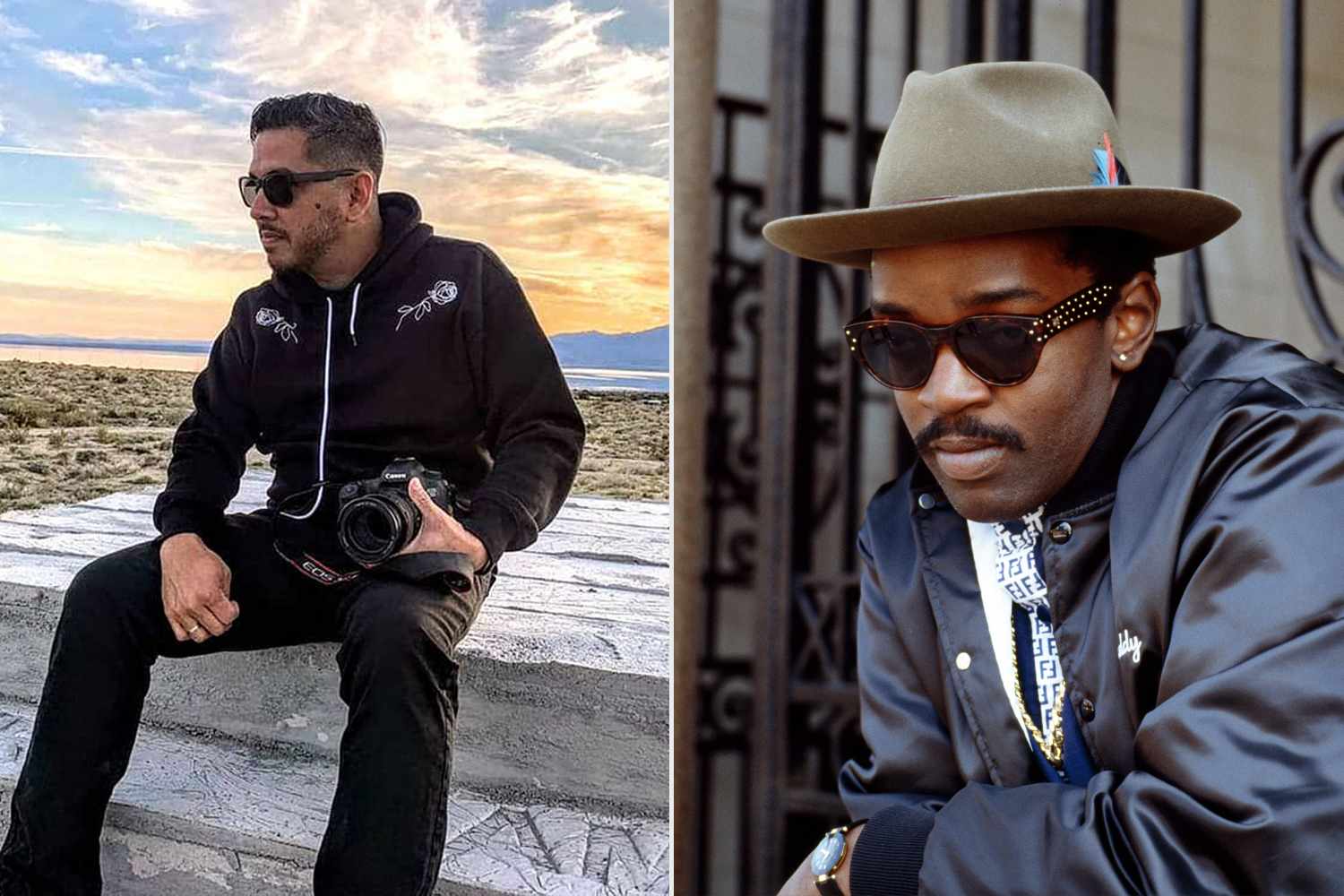
“Fab 5 Freddy, who was the face of MTV, saw those pictures — my pictures, 20-year-old Danny — and he bugged the owner. He’s like, ‘Who took these pictures?’ And the owner was like, ‘Oh, it’s Danny, downstairs.’ And he was like, ‘Yeah, take me to him.’ So he came down to the lab and everybody was like, ‘Fab 5 Freddy’s here for Danny? What’s going on?’ I was super young. I was starstruck too, I was like, ‘Wow.’ ”
Seeing someone he only recognized from television show an interest in his work was a big deal for the young talent.
“He took the time to look at my portfolio. That was a very dear moment to me, and we became friends forever.”
It’s important to hastings to pay it forward. He takes the time to lend advice and feedback to different young creatives looking for their big break.
“If there’s a young artist, and up-and-coming photographer showing me stuff, especially Latinos and Latinas, I take the time to look at their stuff and give them advice, whether it’s technical or industry. Right now, it’s so important to rely on people that have done it and give you the chance, because there was people like that for me. So I pass it back.”
Hastings tries to remember that a journey like his, which has seen him through decades of work on creative collaborations with some of hip hop and Latin music’s biggest stars, as well as a sucessful commercial career.
“It’s not luck. I wasn’t lucky. I was determined, and I am determined. I did my first music video at 23 years old, for Atlantic Records, with Prince Royce, the biggest Latino star at the time. It’s preparation and determination. It’s not ego, because I’m not egotistical, but I really love what I do. There’s something about me, that driving force inside me that I just like, I have to get it done somehow.”
“If I didn’t plant that seed, water it, put it down, I would have never had that moment with Fab 5 Freddy. And I know my Fab 5 Freddys are going to come in, in each part that I want to do. And it means the world to me that people love the work, because it was done with a lot of care and love. I don’t do anything that I don’t like, because if you take the creative work for the money only, it’s never going to sustain itself. It’s never going to become something classic, it’s just going to be temporary.”
There’s no questioning classics in Hasting’s work, from the cover of Wu-Tang Clan’s 36 Chambers to Marc Anthony’s Todo a Su Tiempo and so much more. And though he’s currently looking back at the beginning with Legendario, Act I: Rough, Rugged and Raw, the first of a three-part photographic retrospective by renowned photographer, he’s just as in love with the craft as ever before.
“It maintains. It puts food on the table, it puts my kids through school, it provides a home for myself, my wife, and my family, and I wouldn’t change it for the world. If you love the art, just stay the course, You love to sing, you love to play that guitar? Just keep doing it. It’s going to get rough, but you’re going to keep going. It’s a beautiful career, for sure.”
Legendario, Act I: Rough, Rugged and Raw is now available for purchase.
